Hair Transplant

Your own hair, restored with a natural plan.

A hair transplant moves healthy follicles from a donor area—usually the back or sides of the scalp—to areas where hair has thinned or disappeared. Because the transplanted follicles come from your own scalp, they can continue producing hair in their new location.

At The Standard, every hair transplant begins with careful planning. We consider your facial proportions, existing hairline, pattern of loss, donor supply, hair characteristics, age and the possibility of future thinning. The objective is not simply to place grafts. It is to create natural-looking coverage that remains appropriate over time.

Your procedure is performed onsite in a private setting by our trained medical team using [confirmed transplant technique and device]. Ryne Crews, PA-C, brings years of hair-replacement and restoration experience to patient evaluation, treatment planning and procedural care. Healthy follicular units are harvested from the donor area and placed into recipient sites designed to support the intended angle, direction and density. The final website must identify exactly which clinical steps are performed by Dr. Khan, Ryne and other members of the transplant team.
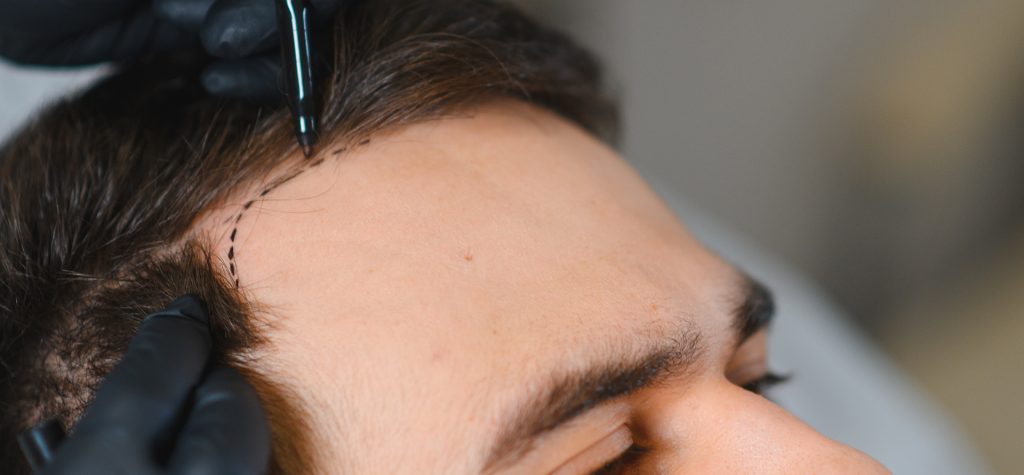

Hair transplant services in Omaha at The Standard
Hair Transplant services at The Standard in Omaha

Your Transplant Process

  1. Consultation and scalp evaluation. We review your hair-loss history, medical history, donor supply and goals
  2. Design and treatment plan. Your clinician recommends the treatment area, estimated graft range and a natural, age-appropriate hairline.
  3. Preparation. You receive individualized instructions, medication guidance and a clear explanation of the procedure and recovery.
  4. Procedure day. Follicles are harvested and placed onsite under the approved clinical protocol.
  5. Recovery and follow-up. We monitor healing and provide detailed care instructions.
  6. Growth and maintenance. Transplanted hairs commonly shed before new growth begins. Results develop gradually, and existing non-transplanted hair may need continued treatment.

Who may be a candidate?

Candidacy depends on a stable or predictable pattern of hair loss, adequate donor hair, general health and realistic expectations. Some men benefit from medical treatment before surgery. Others may not have enough donor supply to achieve the coverage they want. Your consultation is designed to make that distinction clearly.

Results and expectations

Hair transplantation can create lasting growth in the treated area, but it does not stop future loss in untreated follicles. Density, graft survival, recovery and timing vary. We will discuss what is reasonably achievable with your donor supply and whether maintenance medication or regenerative care should be part of your plan.

Hair Transplant FAQ

Does a hair transplant look natural?

Natural appearance depends on appropriate hairline design, graft selection, placement angle, distribution and the quality of the donor area. Your plan is individualized to your features and long-term pattern of loss.

Is the procedure permanent?

Transplanted follicles are generally selected from areas that are more resistant to pattern hair loss. Existing hair outside the transplanted area may continue to thin.

When will I see growth?

Growth develops gradually over several months. Your team will explain the expected milestones for the technique used and your individual plan.

Immediately post treatment, the skin may appear slightly red with limited swelling for up to a few hours post treatment.

How many grafts will I need?

The graft estimate depends on the size of the treatment area, desired coverage, hair characteristics and available donor supply. It can only be determined after an evaluation.

Of course, everyone’s skin is different, and factors like your age, genetics, lifestyle, and skincare habits can all affect how long your results last.

Will I need more than one procedure?

Some patients pursue an additional procedure for greater density or future areas of loss. This possibility is discussed during long-term planning.